
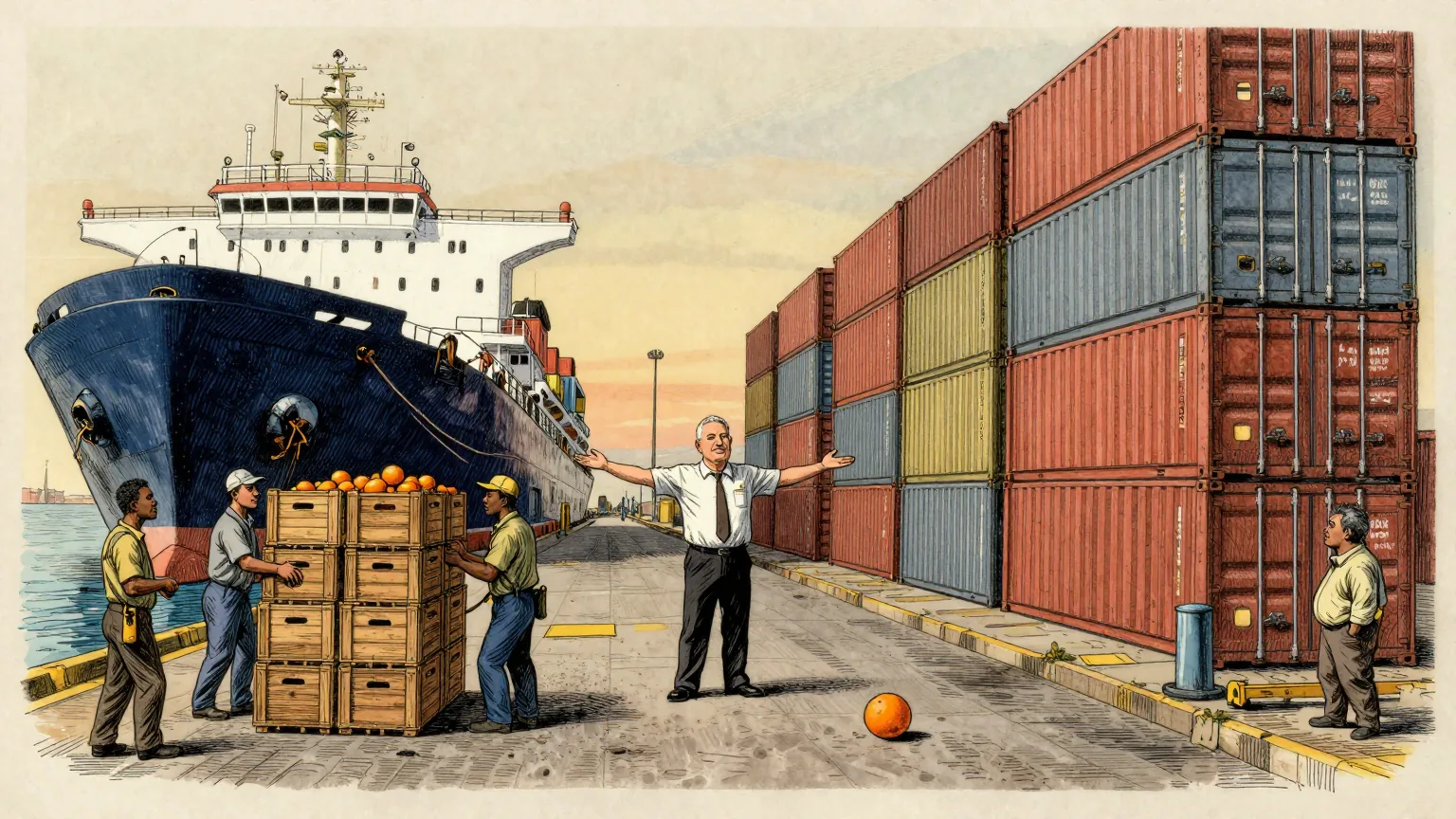
Trade between South Africa and China reached almost 15 billion dollars between May and August, a year-on-year increase of nearly 24 per cent, following Beijing's introduction of a temporary zero-tariff arrangement for qualifying African exports.
The figures were presented at a briefing by Wu Peng, Beijing's ambassador to South Africa. The account here follows Africanews, which carried agency material.
South African exports to China came to nearly 5.3 billion dollars over the four months, up by almost 25 per cent. Chinese imports into South Africa came to 9.47 billion dollars, up by 23 per cent.
Agricultural exports to China were worth nearly 500 million dollars, a rise of more than 35 per cent year on year and the fastest-growing part of the relationship.
Agriculture remains a small part of the total despite its pace. On the figures given, the nearly 500 million dollars of farm exports account for under a tenth of everything South Africa sold to China over the four months.
The zero-tariff arrangement, introduced in May, removes duties on qualifying exports from African countries entering China. It is temporary.
Parks Tau, the minister of trade, industry and competition, urged South African businesses to make use of duty-free access to the Chinese market while negotiations continue on longer-term certainty for exporters and protection for domestic industry.
Africanews did not give the number of product lines the arrangement covers, nor the date on which the temporary duty-free access is due to lapse. Mr Tau's remarks pointed to continuing talks on precisely that question.
The export drive forms part of a wider strategy of developing new markets. Washington has extended the African Growth and Opportunity Act to 2028, although South Africa's inclusion is not assured.
On the figures given, South Africa bought roughly 4.2 billion dollars more from China over the four months than it sold.
It is worth being careful about which direction the duties came off. The zero-tariff arrangement applies to African exports entering China. Nothing was removed from Chinese goods entering South Africa, where trade grew by 23 per cent regardless.
The headline measure is bilateral trade, and bilateral trade is the two numbers added together. On the figures given, about three-fifths of the increase is Chinese goods moving south.
This newspaper therefore records the arrangement as a success, and notes that it is a success South Africa can enlarge at will. Every additional container arriving from Shanghai raises bilateral trade, and bilateral trade is the thing that went up 24 per cent.
The Department of Unnecessary Research has identified the most efficient route to a record. Exports require a buyer, a ship and a crop. Imports require a decision.
Officials hoping for a larger figure next quarter should accordingly stop pressing for more tariff lines. They should buy something.