The Chilean-American author Isabel Allende has won Spain's one million euro Premio Planeta, one of the world's most lucrative literary prizes, with a sequel to her celebrated debut novel, The House of the Spirits.
She entered under a false name. The prize is open to unpublished manuscripts, with the option of submitting under a pseudonym, and Allende entered as Luz Ventura, with the fictional title Los que faltan.
The winning book is La hora antes del alba. Allende, 84, took the 75th edition of the award on Thursday with a novel that returns to the characters of her 1982 debut, a multigenerational family saga set against political upheaval in a country inspired by Chile. She has said the book brings the universe of The House of the Spirits to a close.
She said she had been prompted to write the sequel by decades of readers asking what happened to Alba, the granddaughter of Esteban Trueba and Clara del Valle.
Speaking at the award ceremony in Barcelona, attended by King Felipe VI and Queen Letizia, Allende said it was "like winning the Nobel". The prize is worth 843,000 pounds at current rates. The runner-up, the Spanish writer and screenwriter Sergio Hernández, won 200,000 euros for his historical novel La añoranza.
Allende is one of the best-known writers in the Spanish-speaking world. Her books have sold more than 80 million copies worldwide and been translated into more than 40 languages.
Whether the pseudonym did any work is another matter. "I'd be very surprised if the judges did not know that it was Isabel Allende," Professor Duncan Wheeler, chair of Spanish studies at Leeds University and president-elect of the Association of Hispanists of Great Britain and Ireland, told the Guardian. "You have to bear in mind that the Planeta prize is one of the most generously remunerated in the Spanish-speaking world, but definitely not the most prestigious."
Pseudonyms have form at the Planeta. In 2021 the prize went to La bestia, a thriller published under the pseudonym Carmen Mola, which had been marketed as the identity of a female author. At the awards ceremony, Mola was revealed to be three male writers: Jorge Díaz, Agustín Martínez and Antonio Mercero.
The prize is run by Planeta, one of the largest publishing groups in the Spanish-speaking world, and carries the condition that the winning book be published by them. Allende has been published by Plaza & Janés, an imprint of Penguin Random House, since The House of the Spirits, so the award marks a significant coup for Planeta.
Despite the option to submit pseudonymously, the prize has a history of favouring established writers and television figures. Past winners include Juan Marsé and Manuel Vázquez Montalbán.
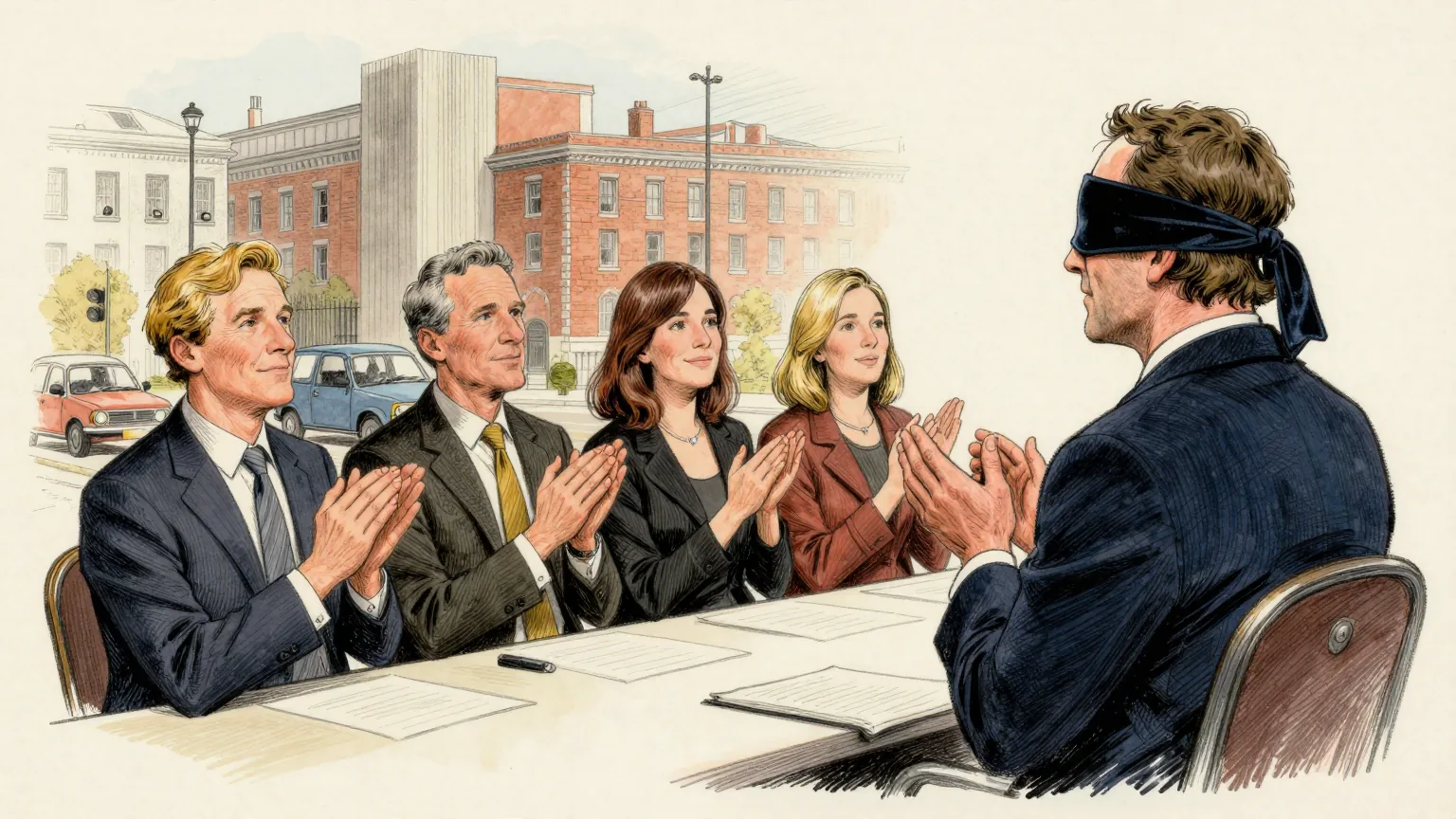
The judging, then, worked exactly as designed. A manuscript arrived under a name nobody had heard of, and the panel was obliged to assess it on the page alone. What was on the page was a sequel to The House of the Spirits, by the author of The House of the Spirits.
This is the strongest form of attribution available to literature. A signature can be copied. A name can be invented, as the prize's own rules invite. A continuation that only one living writer is in a position to write cannot be.
Luz Ventura's entry was therefore the most comprehensively identified submission in the competition. Every other entrant merely supplied a name.
The consequences for the rules are considerable. A pseudonym conceals an author only where the work might have been written by somebody else. Where it could not, the false name operates as a declaration of authorship, and the only genuinely anonymous entry would be one whose author nobody could recognise from the prose.
The Department of Unnecessary Research, which has followed the Planeta since the 2021 award established that a pen name may contain three people, now recommends a single procedural change. Entrants should be required to submit under their own names, and the anonymous category reserved for those capable of writing like somebody else.
Prizes of this kind are judged on the manuscript so that the work can speak for itself. On Thursday, in Barcelona, in front of the King, it did. The panel's remaining task was to open the envelope and discover whether it had been listening.