
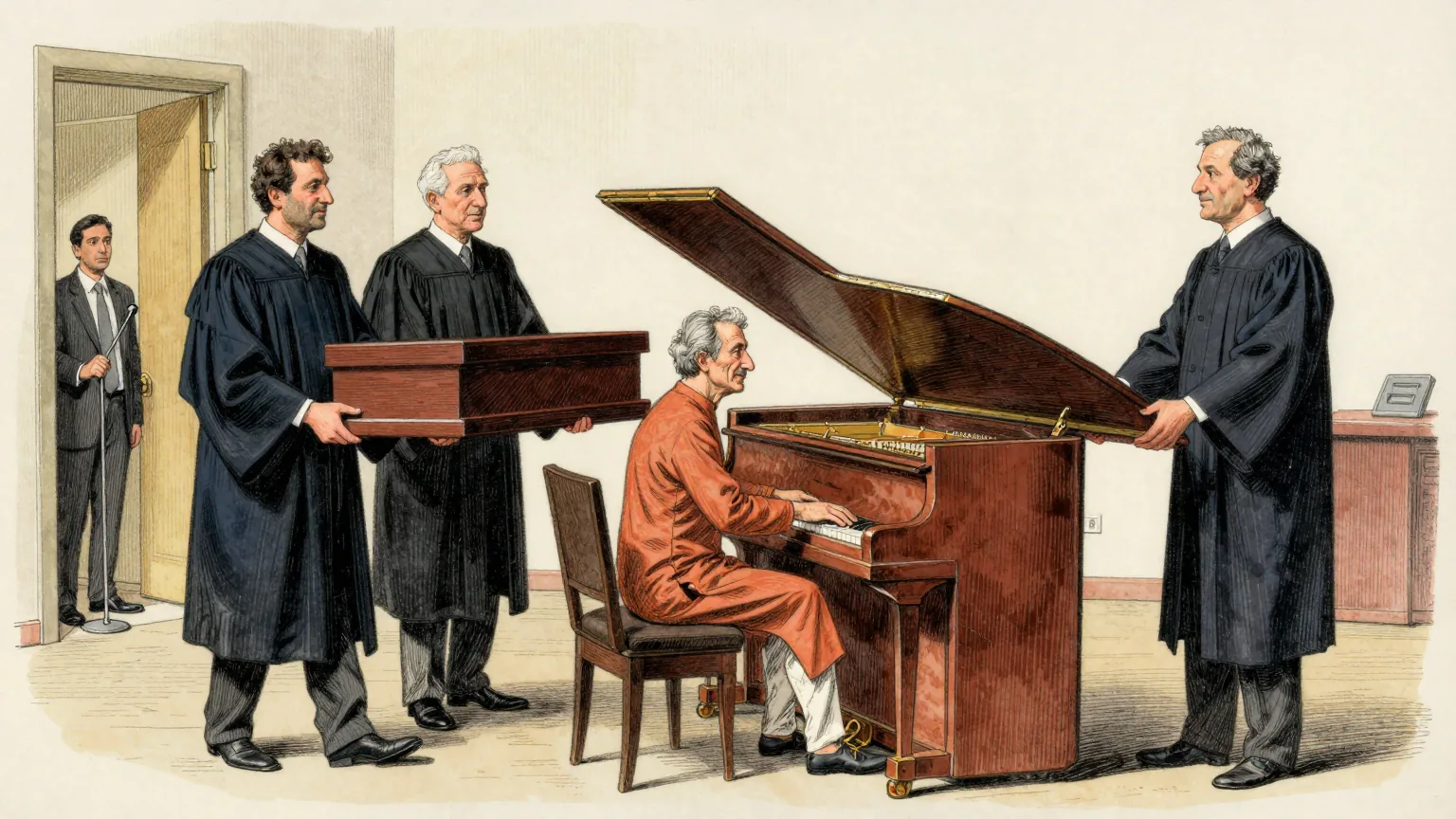
India's Supreme Court has declined to disturb an interim injunction in a copyright dispute over a Tamil film song, leaving in place a ruling that divides one piece of music between two owners.
A bench of Justices J B Pardiwala and K Vinod Chandran dismissed the composer Ilaiyaraaja's petition against the Delhi High Court's order, while clarifying that the High Court's observations were prima facie.
"It is needless to clarify that the observations in the impugned judgment are prima facie, for the purpose of deciding the issue in question," the court said.
The litigation concerns the recreation of 'En Iniya Pon Nilave', from the 1980 Tamil film 'Moodu Pani'. Vels Film International used a recreated version of the song in its film 'Aghathiyaa', claiming a licence from Ilaiyaraaja, who composed it.
Saregama India Ltd sued for infringement, claiming that it owns the rights in the sound recording.
On 21 May the Delhi High Court held that copyright in the sound recording vested with Saregama, while Ilaiyaraaja continued to hold copyright in the underlying musical work.
His rights, the court found, were limited to the musical component and did not extend to the lyrics or to the sound recording. Without a licence from Saregama, Vels Film International could not exploit the sound recordings.
The interim injunction restraining use of the song without Saregama's licence therefore stands, and the Supreme Court refused to interfere with it.
Indian copyright law treats a film song as several works at once, each capable of separate ownership: the music, the words, and the recording in which both are fixed.
The arrangement repays careful reading, because what the composer retains is more precise than it first appears, and considerably more complete.
Ilaiyaraaja holds copyright in the musical work. He does not hold the words, and he does not hold the recording. What he owns is the song with the words taken out and the sound taken out.
A licence from him is accordingly valid, and covers exactly that: the melody considered apart from any instance of anybody hearing it. Vels Film International had permission to use the music. It did not have permission to use any version of the music.
The Department of Unnecessary Research regards this as the cleanest asset in Indian entertainment. An underlying musical work cannot be pirated, because it cannot be copied. To copy it you must record it, and at that moment you have made a sound recording, which belongs to somebody else.
The composer's position is therefore secure in a way no rights-holder has previously managed. His property is safe from infringement in perpetuity and in all circumstances, on the single condition that it is never played.
He remains entirely free to compose it again. He is advised only that nobody should be present.