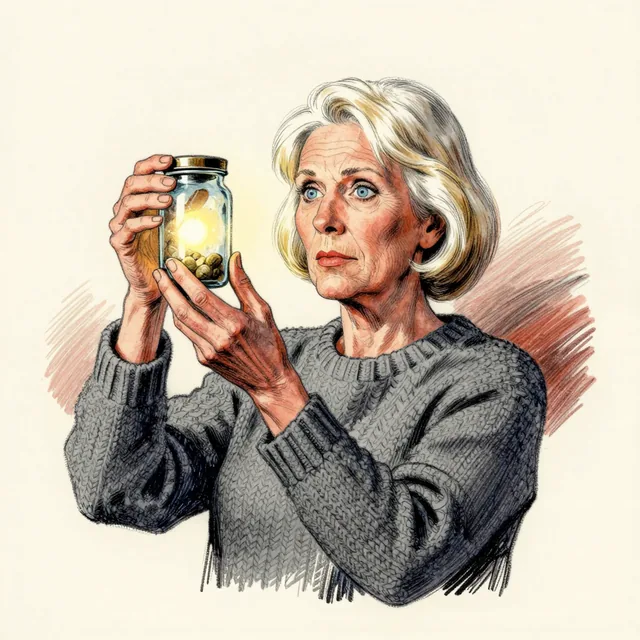
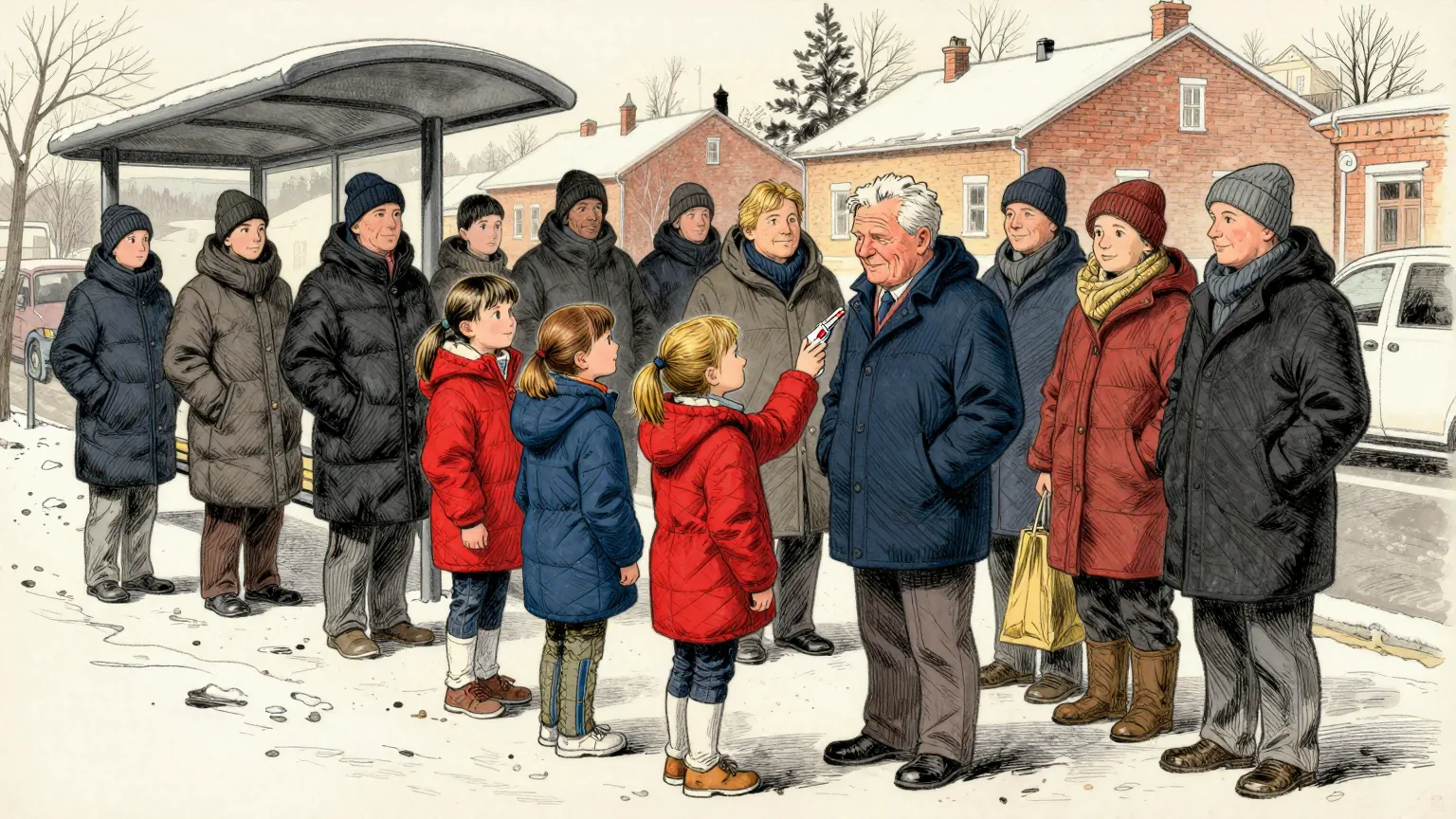
For a year, about 6,000 Swedish schoolchildren went out with thermometers and asked adults whether they were comfortable.
The project, Kallt och svettigt — “Cold and sweaty” — was run by the Department of Earth Sciences at Uppsala University and ran from autumn 2025 to summer 2026.
Pupils aged 10 to 15 took part, at schools from Scania in the far south to Norrbotten in the far north. Each interview paired what a person said about how the weather felt with a reading of the actual temperature where they were standing.
The question was whether people in different parts of a very long country experience the same weather differently.
They do. Respondents in the south reported finding conditions pleasant more often than those in the north.
The gap is not simply a matter of the north being colder. Both groups were asked about the conditions they were standing in at the time, so the difference lies in the verdict rather than in the thermometer.
The southern advantage did not hold all year. In Scania the pattern shifted over the summer months, when high temperatures stopped being agreeable.
Across the country, reported comfort peaked at moderate warmth and fell away above roughly 25C.
The readings also showed how local weather is. Buildings and trees create microclimates that make the temperature where a person is actually standing meaningfully different from the temperature in the forecast.
That finding has a practical edge. A forecast is issued for an area; a person occupies a spot. Between the two sit a wall, a building or a tree, and the pupils recorded the difference often enough for it to show.
“We hope the project has stimulated the students' curiosity about the climate and the environment,” said Gabriele Messori, professor of meteorology and the project's leader.
What Sweden has quietly acquired here is a national observation network. It has roughly 6,000 stations, distributed from Scania to Norrbotten, each one between ten and fifteen years old.
The instruments are unusually capable. A conventional weather station reports the temperature. These report whether the temperature is any good, which is the variable the public consults a forecast for, and which nobody had previously been measuring.
The Department of Unnecessary Research sets out the network's limitations honestly. Coverage is confined to school hours and school terms. There is a total outage each summer. No station may be relocated without the written consent of a parent.
Calibration is the harder problem. The readings already show a systematic north-south bias of the kind that would ordinarily demand correction, except that in this case the bias is the finding.
Above 25C the disagreement disappears. Every region reports that it is too warm, which is the closest Sweden has come to a unanimous meteorological position.
The network will drift out of specification over the next five years. It will do so by getting older.