
The leader of Sweden's Social Democratic Party, Magdalena Andersson, said on Tuesday that her efforts to form a government had failed, prolonging a political deadlock a month after the country's parliamentary elections. Al Jazeera's staff reported the announcement with AFP.
Speaking at a news conference, Andersson said talks with the three other parties in the country's left-wing bloc had hit an impasse. Despite progress, she said she did not believe conditions were in place to "form a government that can be tolerated by parliament".
It was her second attempt since the parliamentary vote on 13 September.
The arithmetic is narrow. The centre-left bloc won 176 seats in last month's election and the right-wing bloc 173, between them the whole of the 349-seat chamber.
The obstacles are terms set within the winning bloc rather than across the chamber. The Centre Party has said it will oppose a government that includes cabinet posts for the Left Party, which has in turn insisted it will only support a left-wing government of which it is a member.
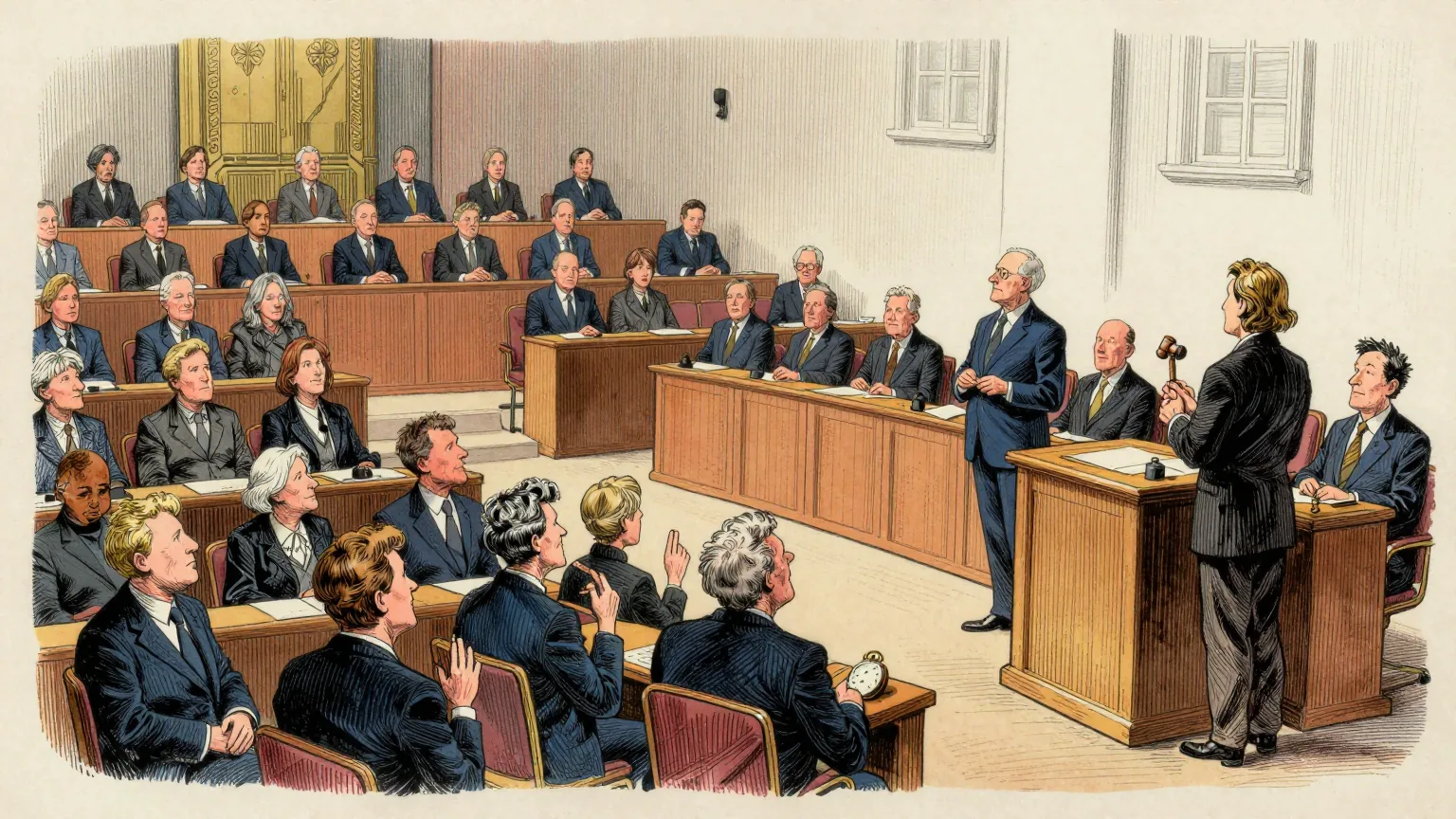
Shortly after the announcement, the parliament's speaker, Andreas Norlen, who had tasked Andersson with gauging whether a government could be formed, said a vote on whether to make her prime minister would proceed on Thursday. He conceded that she would likely fail to pass it.
Under the Swedish system, a prime minister can secure office so long as a parliamentary majority does not vote against them.
If Thursday's vote fails, Norlen is expected to ask Ulf Kristersson, the outgoing prime minister, who currently leads a caretaker government, to hold negotiations with other parties. Norlen said he considered Kristersson a potential next candidate, but did not wish to commit to that too soon and would "respect the process".
To succeed, Kristersson would need to convince an opposition party to support him, or at least not to vote against him. The speaker has four attempts at proposing a prime minister for parliament to vote on; if the fourth fails, a snap election must be called. Negotiations after the 2022 election took more than a month, and those after the 2018 election lasted more than four months.
The rule in the middle of all this deserves to be read on its own, because it is the most economical sentence in European constitutional practice. A prime minister takes office unless a majority votes against. Approval is not required. Only the absence of disapproval.
On that basis Thursday's vote is not a test of support at all. It is a test of whether a sufficient number of the chamber's 349 members can be persuaded to do nothing.
This newspaper notes the consequences for campaigning, which are severe. A candidate's task is not to assemble a majority but to avoid provoking one, and every argument made in the chamber risks converting an abstention into a vote against. The safest speech is the one not given.
The ideal Swedish prime minister, on the letter of the procedure, is therefore the candidate about whom the fewest members hold any view. Enthusiasm is not merely unnecessary; in sufficient quantity it is a hazard, because it is audible to the people who would otherwise have stayed in their seats.
The word used by the parties themselves is "tolerated", which the procedure takes as its standard. It sits above being ignored and some distance below being wanted.
The Department of Unnecessary Research has reviewed the four attempts available to the speaker and reports that Sweden has now spent a month looking not for the candidate most of its parliament wants, but for the one the fewest of its members can be bothered to oppose.