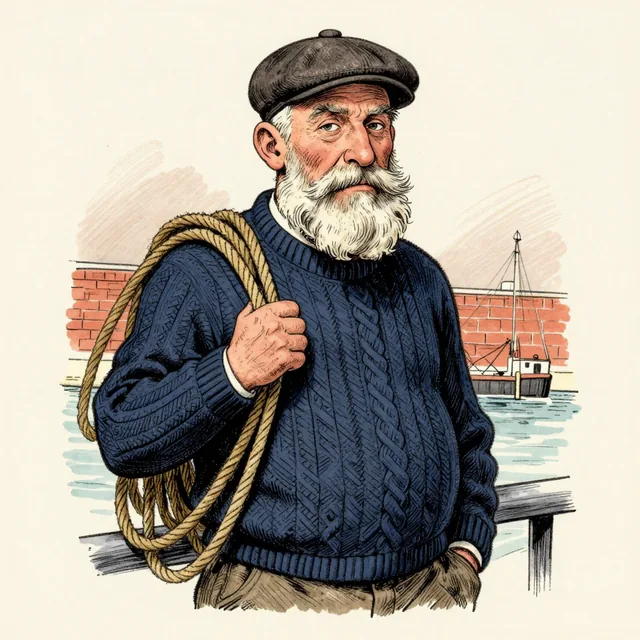
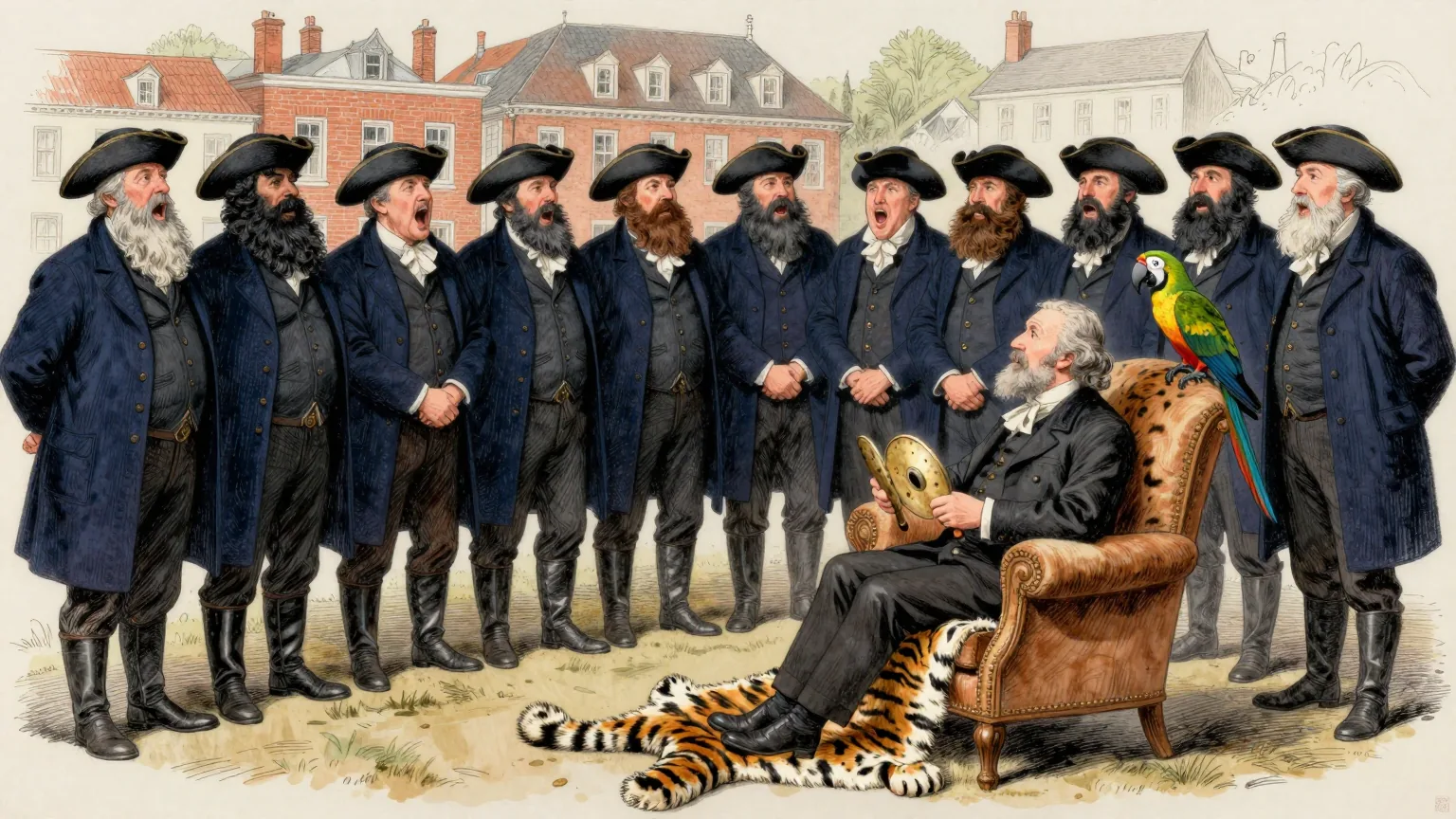
19 September marks International Talk Like a Pirate Day, an annual event that sees children and adults around the world play pretend, usually in a long coat and leather boots, perhaps with a cutlass, and a wig of long unruly hair spilling out from under a tricorne hat. And saying "arr" a lot.
According to Kristie Patricia Flannery, a pirate historian and Senior Research Fellow at the Institute for Humanities and Social Sciences at Australian Catholic University, this vision is disappointingly limited. Popular culture has settled on a narrow stereotype, she writes, while the oceans were once crowded with all manner of pirates, from Caribbean raiders to Chinese fleet commanders and Southeast Asian Muslim seafarers.
The term itself carries a judgement. "Pirates" refers to people who launch attacks from the sea to take what is not theirs, so applying the label characterises a group as illegitimate. In the early-modern era, from the 16th to the 18th century, who was named a pirate came down to who was doing the naming.
Today's depictions draw heavily on real marauders, among them the Bristol-born Englishman Edward Teach, better known as Blackbeard, who lived from 1680 to 1718 and featured in Captain Charles Johnson's 1724 book A General History of the Pyrates. Robert Louis Stevenson's Treasure Island, published in 1883, did the rest.
Blackbeard rose to infamy during the golden age of piracy, roughly the 1650s to 1720, which saw escalating attacks on ships and settlements around the Caribbean and the Atlantic coast of the Americas. Atlantic pirate crews, including Blackbeard's, were multi-ethnic, bringing together Europeans and people of African descent. Flannery's account of the period is a good deal grimmer than the fancy dress.
On the matter of the accent, she is blunt. Only some Caribbean pirates would have spoken English, and fewer still with the thick West Country accent mimicked in pirate-speak today. According to Alexander Exquemelin, a French surgeon who joined a Caribbean crew in the late 1600s, "the greatest part of the pirates are skilful in the Spanish tongue".
Large-scale Atlantic attacks were mostly suppressed in the 1720s, when rival European imperial powers worked together against what they called the "common enemies of mankind". Elsewhere piracy proved harder to defeat.
In 17th-century maritime Asia, massive Chinese pirate fleets grew powerful, the largest of them controlled by the Zheng family. By mid-century the Zheng group, led by Zheng Chenggong, whom Europeans called Koxinga, was making more money than the Dutch East India Company. Born in Hirado to a Japanese mother and a Chinese merchant and pirate father, he was likely fluent in Japanese and Hokkien. In 1662 he seized Taiwan and expelled the Dutch, commissioning a portrait in which he is seated as a virtuous emperor on an armchair draped in tiger skin.
In the 18th century, the greatest threat to Spain's Asian empire came from what Spaniards called "Moro pirates", a term they used for Muslim maritime forces from the southern Philippines and the islands of the Sulu Sea. Their fleets could incorporate dozens of long boats known as caracoas and prahus, carrying thousands of sailor-warriors armed with the kris and a small cannon called a lantaka. Most would have spoken Austronesian languages, including Tausug and Maranao. They approached under brightly coloured silk banners, with cymbals and drums keeping the rowers in rhythm.
Flannery's conclusion is a costume note: next time the day comes round, it might be worth ditching the black beard for a faux tiger skin, a silk banner or a British-style red coat.
This newspaper would go further, because the name of the observance makes a factual claim and the claim is testable.
The day instructs participants to talk like a pirate. On the historian's evidence, the representative pirate of the period was skilful in Spanish, or fluent in Hokkien and Japanese, or a speaker of Tausug or Maranao. The West Country "arr" is attested chiefly in a novel from 1883.
The Department of Unnecessary Research therefore finds the observance in breach of its own title, and recommends that it be conducted in Spanish, with Hokkien accepted for anyone claiming command of a fleet.
Supporting requirements follow. Those declaring themselves fleet commanders should provide their own cymbals and drums, at a tempo sufficient to keep rowers in rhythm, and are reminded that an armchair draped in tiger skin remains the only documented seating for the role. The tricorne hat may stay, on the grounds that nobody has proposed anything better.
One detail unites every pirate in the record, across four languages and three oceans, and it is the taking of things that were not theirs. It is also the only part of the costume that nobody puts on.