
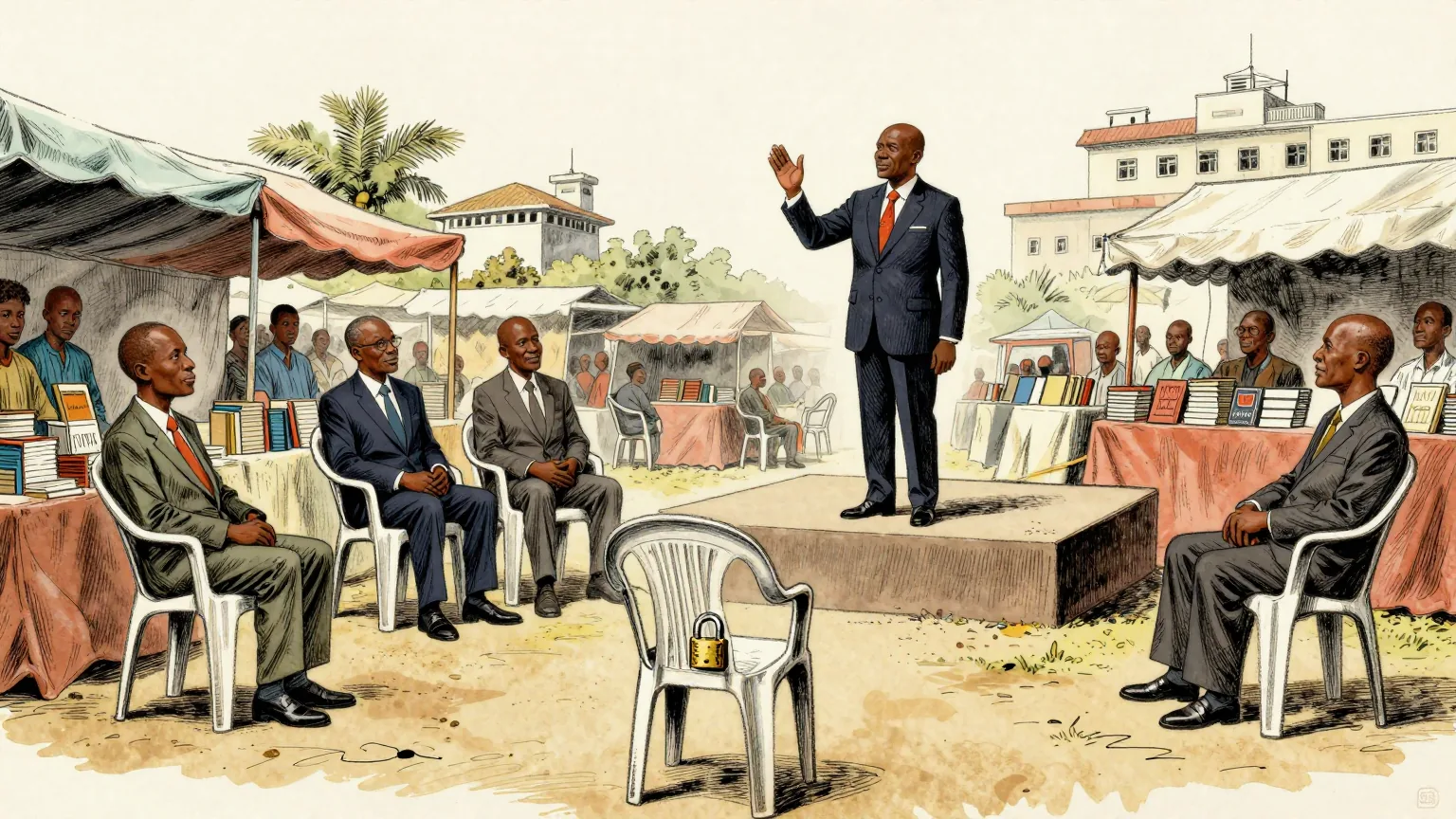
The Tanzanian government has given public institutions two weeks to agree on concrete measures to combat book piracy and protect the intellectual property rights of writers and publishers, warning that it will not tolerate practices undermining the country's book industry.
The Deputy Minister for Information, Culture, Arts and Sports, Hamis Mwinjuma, issued the directive in Dar es Salaam on Monday during the official opening of the 33rd Tanzania International Book Fair, calling for urgent action to address challenges facing the publishing sector. Tanzania's Daily News reported his remarks.
He said the growth of Kiswahili and the development of the book industry depended on genuine cooperation among stakeholders and the timely implementation of their proposals rather than further delays.
Addressing stakeholders from the media, education and publishing sectors, Mwinjuma identified piracy as a major obstacle to the industry's growth, stressing the need for decisive legal action to protect writers' work and the resources invested in producing literary works.
He directed that the meeting be held within two weeks, insisting that action on the concerns raised by stakeholders could no longer be postponed.
"We need to do it now; we should have done it yesterday or last week," he said.
On enforcement, the deputy minister directed the Copyright Society of Tanzania, known as COSOTA, to work with the Publishers Association of Tanzania and submit reports detailing enforcement operations conducted and cases filed against individuals involved in the illegal reproduction and distribution of literary works.
"I am an author and I know the huge challenges they face in the fight against piracy. I instruct COSOTA to sit down with PATA and not just submit a plan, but a report on the operations you have conducted and the cases you have filed regarding piracy of writers' works," he said.
He also called for reports on the implementation of previous government directives, saying he wanted a clear account of progress made and the status of each instruction.
Beyond piracy, Mwinjuma said books should not be viewed merely as classroom learning materials but also as repositories of national records, links between generations and tools for developing critical thinking and creativity, and reaffirmed the government's commitment to strengthening writing, publishing and book distribution and to expanding domestic and international markets.
The timetable is the part of this worth following closely. The measures were wanted yesterday, or failing that last week. They are to be agreed within two weeks. The directive therefore opens with a deadline that has already passed and closes with one that has not yet begun.
Between the two sits a meeting, which is the fastest instrument the sector has available. Piracy, by contrast, convenes nobody, agrees nothing, has no stakeholders to bring together and has never once asked for an extension.
The request for reports on previous directives completes the design. An instruction asking what became of earlier instructions is itself an earlier instruction from the moment it is issued, and will in due course require an account of its own progress and status. The industry is thus committed to a report on the reports about the reports, with the first instalment due in a fortnight.
The Department of Unnecessary Research, which maintains a standing interest in instruments of this kind, has reviewed the arithmetic and notes that the Tanzania International Book Fair has now been held 33 times, and that the two-week clock attached to this directive is the shortest interval anywhere in the proceedings.
The deputy minister is right that it should have been done yesterday. On the timetable as issued, it will be done a fortnight after the day on which it was already too late.