
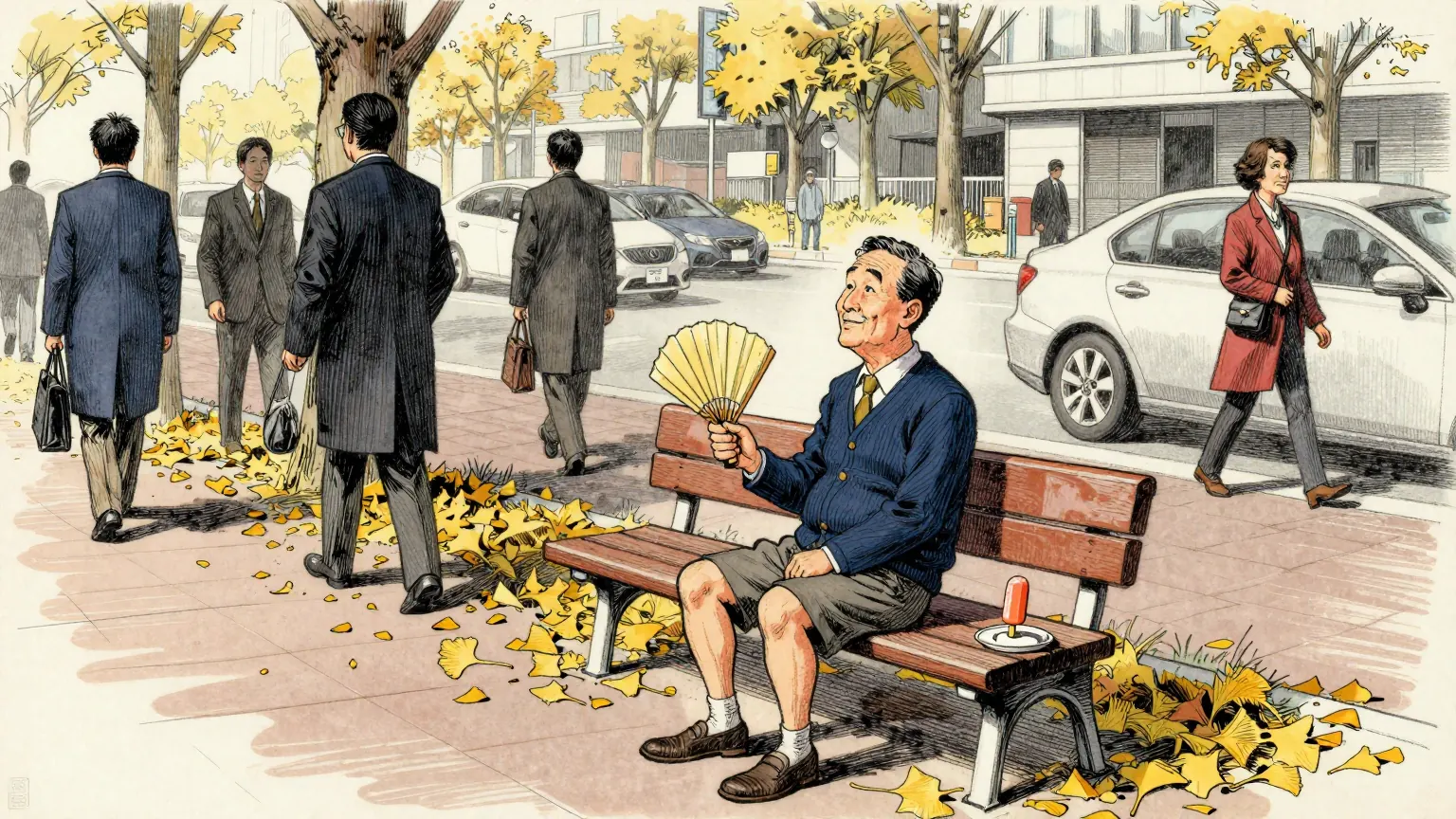
Tokyo climbed above 30 degrees Celsius by early afternoon on Wednesday, the latest date in the year on which the Japanese capital has done so since observations began in 1875.
The reading displaces 19 October 2024 as Tokyo's latest midsummer day, the Japan Meteorological Agency's term for any day that reaches 30C.
Osaka also passed 30C on Wednesday, beating a late-season mark that had stood since 20 October 1933. Observations in Osaka began in 1883.
The two records therefore come from series of different lengths, and from very different distances. Tokyo's previous latest midsummer day was two years ago. Osaka's was 93.
Because the 2024 date was the previous latest in a series beginning in 1875, no year before it had carried a 30C day so deep into October in the capital.
The agency attributed the heat to warm, humid air moving north from the south, which pushed temperatures up along the Pacific coast. Kazuhiro Shirono, a data science official at the agency, discussed the figures with AFP, whose report this account follows.
Japan recorded its hottest summer on record in 2025. Scientists link human-caused climate change to more frequent and more intense extreme heat.
The agency's vocabulary has been expanding to keep pace. Earlier this year it began using the term kokushobi, glossed as cruelly hot day, for days that reach 40C.
It is worth being exact about what has been recorded. The agency's definition of a midsummer day contains a temperature and nothing else. It makes no reference to the month, the season or the position of the earth.
Midsummer, on the agency's own terms, is therefore not a time of year. It is a threshold, and on Wednesday the threshold was in late October, in two cities at once.
This newspaper accepts the finding and notes its consequence for the record books. What is being broken is the record for the latest appearance of midsummer, and midsummer has now appeared later twice in three years. The record is held, each time, by the summer that would not stop.
The Department of Unnecessary Research has considered where the series can go. A midsummer day requires only 30C, so the latest possible midsummer day is the last day of any year on which 30C occurs, and the agency has no mechanism for closing the season early.
Osaka's old mark stood for 93 years. Tokyo's stood for two. Midsummer will go on being recorded on whichever day happens to reach 30C, which is the only rule it has ever had.