
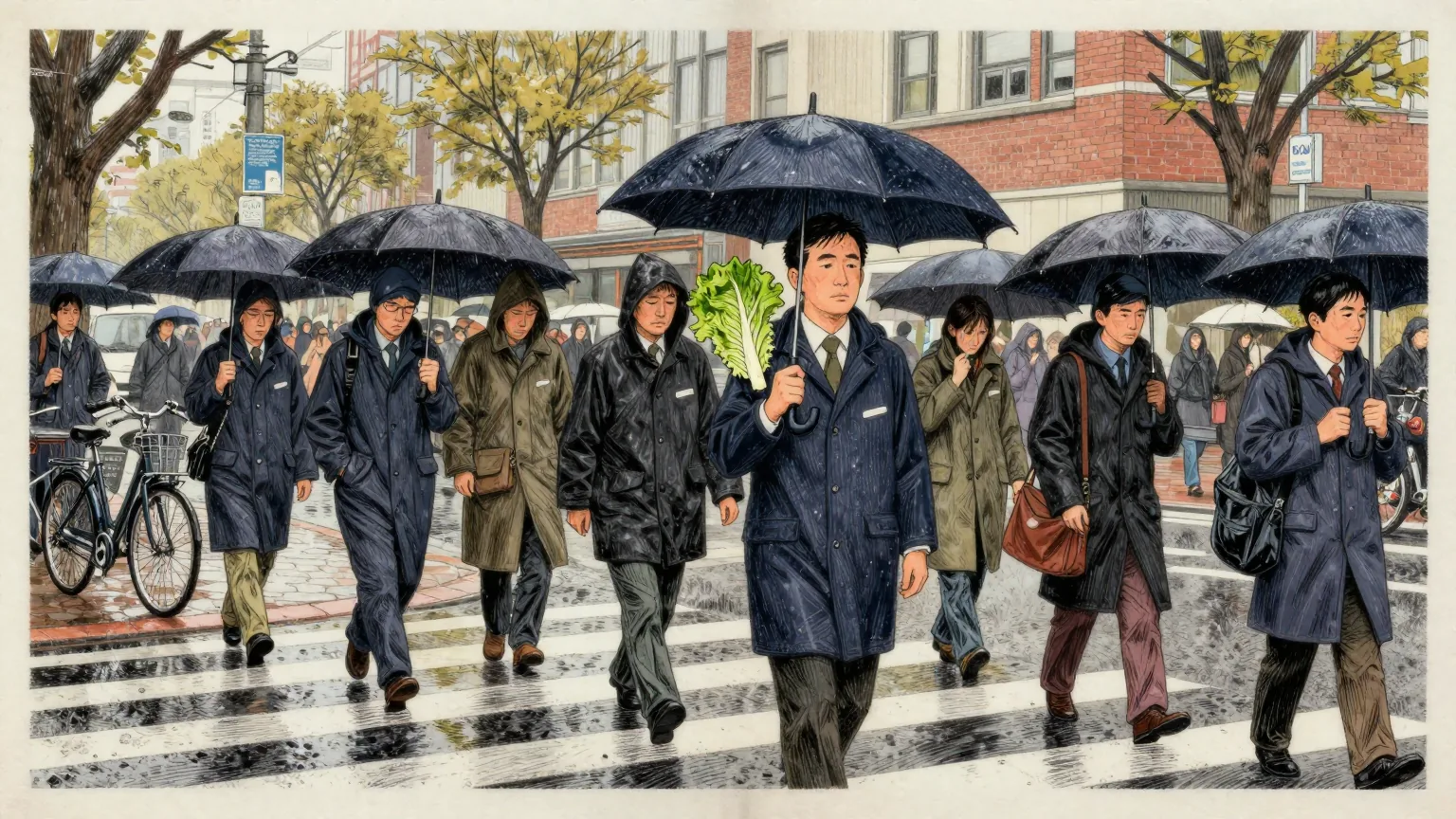
Residents of Tokyo woke on Wednesday to a sound that has become familiar: rain against windows and balcony floors. The Japanese capital has now recorded 35 consecutive days of rain, the longest such run since observations began in 1886.
Experts attribute the streak to a combination of climate change and El Niño, which has produced a prolonged front of high pressure over the Pacific Ocean.
The figures are substantial. Central Tokyo was drenched by 629mm of rain, or 24.8 inches, between the start of September and Monday this week, nearly three times the normal level for the period. Over those same weeks the city recorded just 45.8 hours of sunshine, the second lowest on record according to the Mainichi Shimbun, and on 14 days the sun did not appear at all.
The previous record for consecutive rain in Tokyo was 33 days, between 27 June and 29 July 2019. The city has not had a dry day since 27 August.
"Autumn rain fronts are staying longer than usual," Masayuki Kyoda, an official at the Japan Meteorological Agency, told Agence France-Presse. Kyoda said it was difficult to establish a direct link between climate change and this particular streak, though the agency has said in a recent report that "global warming was affecting Japan's weather long-term, including through more precipitation".
The effects have reached the shops. Crop damage in agricultural regions near Tokyo has pushed up vegetable prices, particularly for leafy greens, with one supermarket worker in the capital quoted as saying the price of a head of lettuce had more than doubled, to 450 yen. Residents have also complained of being unable to dry their washing, and of consequent trips to the launderette.
Tokyo's rainy season normally falls in June. This year there have been regular downpours throughout the summer, and the news that the city had not seen a single dry day since late August prompted a wave of social media complaints about what has been christened rain fatigue.
A consecutive-day record is an unusual kind of achievement, because it is the only kind that can be destroyed by good news. The measure is unbroken days. Tokyo is 35 days into the longest run in 140 years of observation, and the run extends itself every morning it continues. One clear afternoon ends it permanently.
That is the city's position, stated plainly. Tokyo now holds a record it cannot keep without the exact conditions it is complaining about, and the 450-yen lettuce is not a cost of the weather. It is the entry fee.
The margin deserves respect. The 2019 benchmark of 33 days stood for seven years and has now been beaten by two, with the lead growing at a rate of one day per day, which is the fastest rate at which any record of this type can be extended. No other discipline permits improvement without effort.
The Japan Meteorological Agency's register, it should be noted, records when a streak ended and not how. A dry Thursday would appear in the archive as the day Tokyo stopped, with no column for the fact that everybody enjoyed it.
The Department of Unnecessary Research has considered what instruments are available to a city wishing to protect such a record, and reports that there is exactly one, that it is held above the head, and that Tokyo already owns several million of them.
The forecast is for more rain. The record is safe.