
Michelle Bachelet, a former president of Chile, has withdrawn her candidacy to become the next secretary general of the United Nations, ending an attempt that had struggled to gain traction among security council members.
Bachelet, 74, announced her decision in a video posted on Instagram on Saturday, saying: "I will now continue, with the same determination as always, my international work." The two-time Chilean president and former UN human rights chief had positioned her campaign around defending multilateralism and international law.
Her withdrawal came after a third informal straw poll, held on Friday, in which her support had all but collapsed. The same poll put Costa Rica's Rebeca Grynspan in the lead.
Bachelet's exit leaves seven candidates in the race to succeed António Guterres, who concludes his second five-year term as secretary general on 31 December. It is still possible for more candidates to enter the contest.
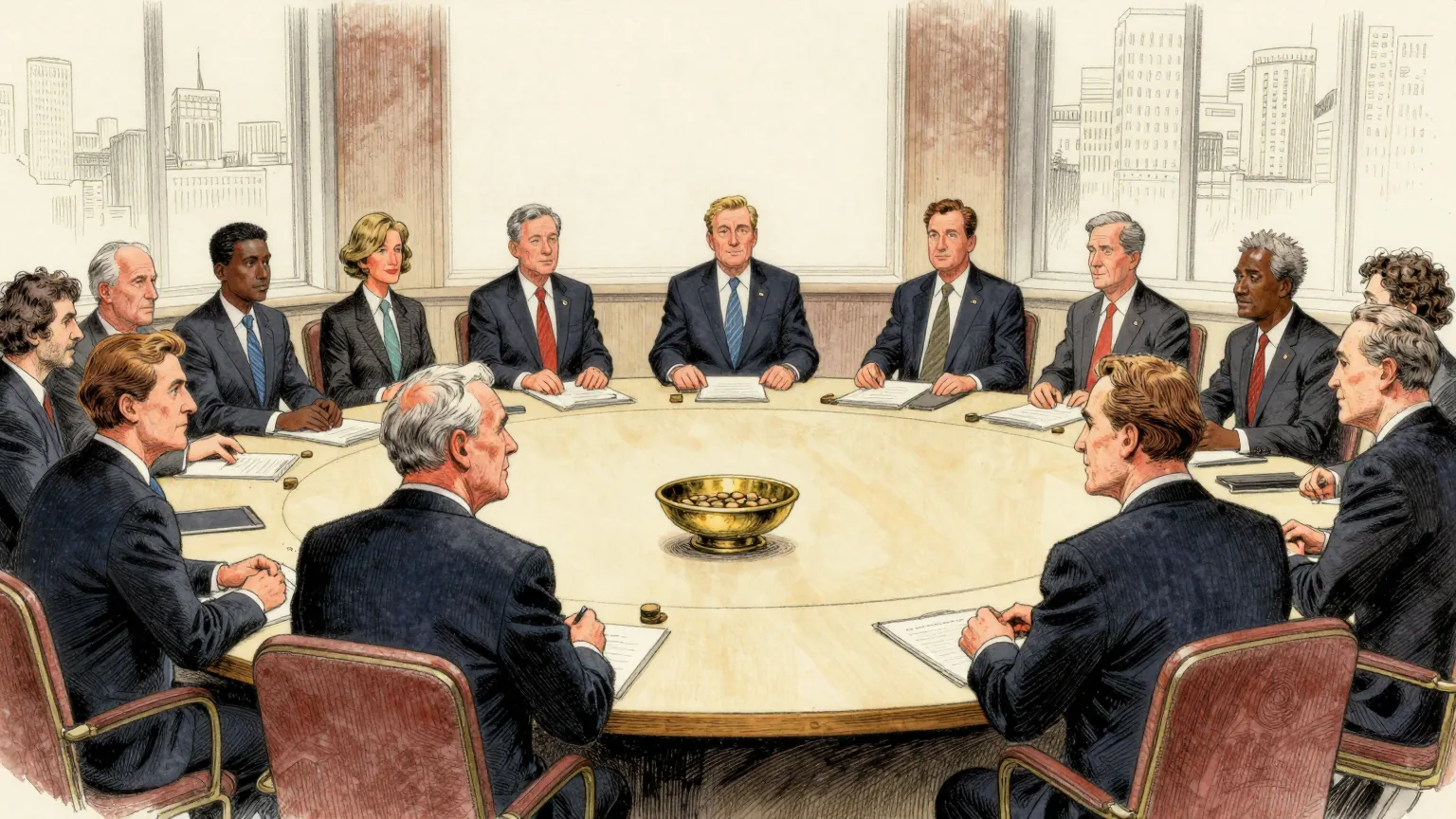
The straw polls are secret and informal. Each of the fifteen members of the security council marks each candidate in one of three ways: encourage, discourage, or no opinion expressed. The results are not announced. They reach the outside world through diplomats.
Friday's round lasted more than an hour. Diplomats said afterwards that Grynspan, the secretary general of the UN Conference on Trade and Development and a former vice-president of Costa Rica, finished first with nine encouragements and five discouragements. Carolyn Rodrigues-Birkett, Guyana's ambassador to the UN, was second with eight and six. Rafael Grossi of Argentina received five encouragements and eight discouragements.
France's ambassador to the UN confirmed only that "the third round of straw polls has taken place".
The thresholds that follow are arithmetical. To be recommended, a candidate needs at least nine votes from the fifteen-member council and must avoid a veto from any of the five permanent members: Britain, China, France, Russia and the United States.
The council then formally recommends a single candidate to the 193-member general assembly for election. The assembly's approval has long been seen as a formality once the council reaches consensus.
That last sentence is the one to sit with. The straw polls are informal, non-binding and unannounced. The general assembly's vote is formal, binding and, by common consent, already decided.
The stage with consequences is therefore the one that commits nobody, and the stage that commits everybody is the one whose outcome is known in advance. A candidate has just left the contest on the strength of a poll that had no standing to remove her from it.
This newspaper wishes to be fair to the arrangement. It does not lack rigour. It simply applies its rigour to the part that does not count.
The ballot itself deserves attention. One of its three options is an explicit statement that no opinion is held. It is marked, collected, counted and passed on. A council member with nothing to say is required to say so, at which point it becomes a recorded position.
Grynspan's nine encouragements and five discouragements account for fourteen of the fifteen members. The remaining seat is occupied by somebody who has formally registered an absence of view, and whose absence of view has now been reported around the world.
It is also the only entry on the ballot that cannot be shifted by argument. Encourage can become discourage. Discourage can become encourage. No opinion expressed can only be abandoned, which would require changing one's mind about not having one.
The Department of Unnecessary Research proposes a modest reform: that the straw polls be made formal, so that they can then be declared non-binding in the correct order, and that the general assembly's election be reclassified as informal, to reflect what everyone says it is. Seven candidates remain and more may yet enter. The only round that settles anything is the round in which nothing is at stake.