
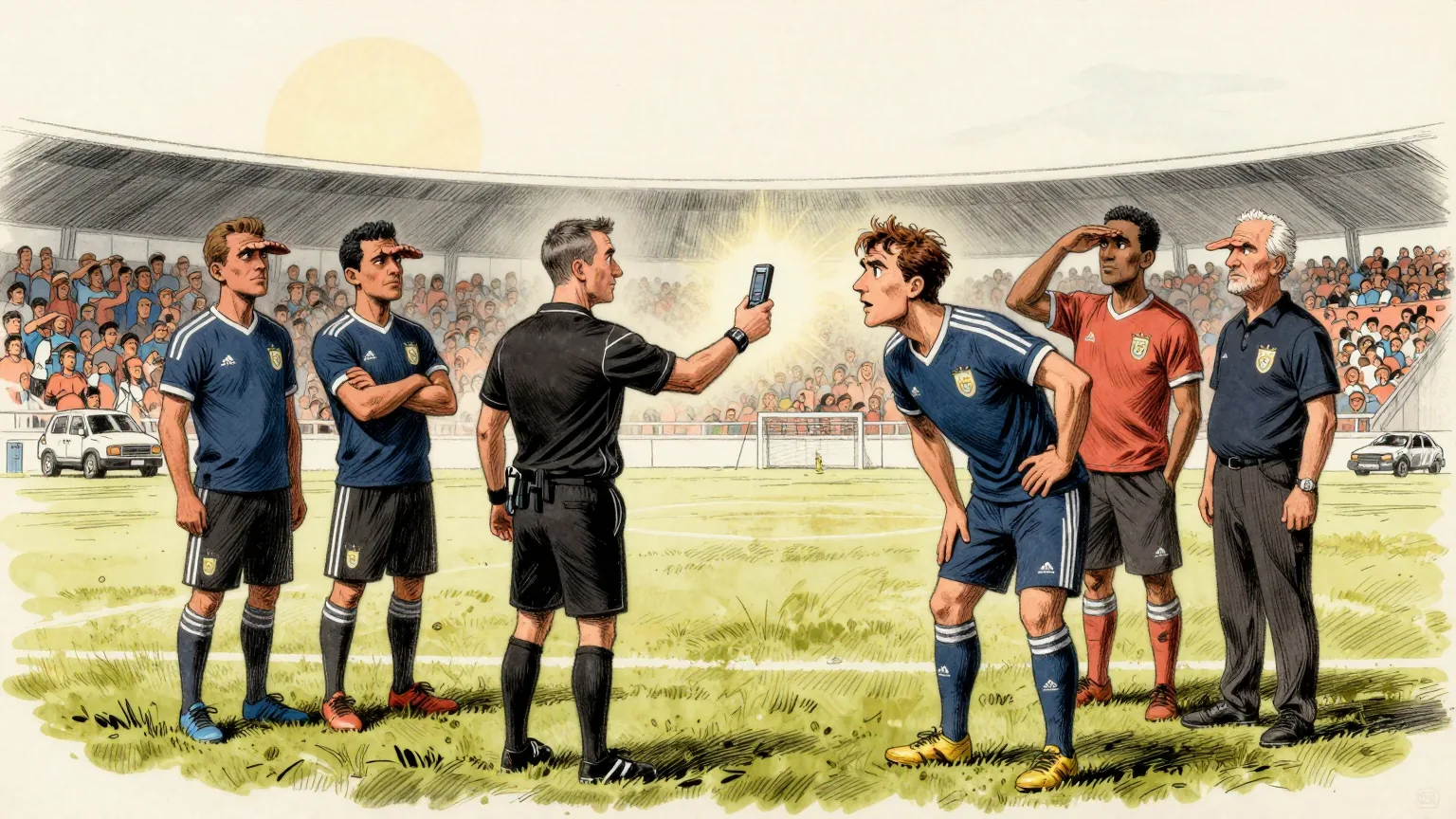
A referee raised a phone-sized electronic device to caution a player during a Uruguayan cup match this week, replacing the familiar flash of a yellow card with a digital screen, in a trial aimed at modernising one of football's oldest rituals.
Reuters reported that the match official Eduardo Varela used the device during Nacional's Copa Uruguay match against Rentistas on Thursday, testing a system designed to simplify referees' administrative work by recording disciplinary decisions digitally.
"We are looking to bring technology to the only thing in football that is still analogue," said Mauro Sacco, director of REFe, the company behind the project, in an interview with the Uruguayan radio programme El Espectador Deportes on Friday.
The idea emerged more than three years ago, when Sacco and his fellow director Diego de la Pena watched a match in rainy conditions and considered how referees recorded cautions by hand before transferring the information to digital systems.
The device logs match incidents with timestamps, and the developers want to streamline the submission of official records to the Uruguayan Football Association's COMET platform.
For Varela, the tool was comfortable to use and its software responded quickly, although he acknowledged that it lacked the drama of the traditional gesture. "You lose a little of the magic of the quick card but I think it is something that will help us a lot, especially with the administrative side," he said.
The first real-world tests have also exposed a problem, and it is not a software problem. An earlier trial was abandoned because sunlight made the screen difficult to see, and during Thursday's match spectators and television viewers struggled to distinguish some decisions.
"It's a project with room for improvement. It looked much better live than it did on TV. The challenge we face now is to improve it for the whole audience," de la Pena said.
He then set out the specification in a single sentence: "The yellow card has to be yellow, the red card has to be red, and it has to be visible to people at the ground and on television."
The developers are exploring changes, including LED lighting around the device, to make the colours clearer to spectators. Sacco said the brand had been registered and the hardware and software patented, with the developers based in China.
The reaction online has been mixed. "We have seen all kinds of comments, positive and negative. We have even laughed at the memes," Sacco said. "The important thing is that people are talking about it. Any innovation takes time." REFe hopes to refine the technology and eventually see it adopted by the South American governing body CONMEBOL and by FIFA.
The specification quoted above is the most consequential sentence anybody has said about football this week, and it has been published without anybody appearing to notice what it commits the sport to.
It states that the sanction is the colour. Not the referee's judgement, not the entry in the record, not the timestamp: the colour, visible, at the ground and on television. On the old equipment this was a safe thing to say, because a piece of yellow plastic is yellow in all conditions and holds no opinion about brightness.
A screen is different. A screen's colour is a setting. Once the sanction is a setting, it is adjustable, and this newspaper must ask by how much. A caution displayed at full brightness is plainly a caution. A caution displayed at forty per cent, in direct sun, legible to nobody beyond the player and the fourth official, is forty per cent of a caution, and the laws of the game offer no guidance on the remaining sixty.
The earlier trial, abandoned because sunlight made the screen difficult to see, must on this reading be regarded as a match in which sanctions were issued and did not exist. Our analysts have been unable to establish what became of them.
The proposed remedy is LED lighting around the device, which would make the severity of a booking partly a lighting decision, and would place the illumination budget of a Uruguayan cup tie somewhere in the chain of disciplinary authority between the referee and the appeal panel.
The Department of Unnecessary Research notes that the developers have already conceded the key point, which is that the decision looked much better live than it did on television, and that a decision can therefore have happened at the ground without yet having happened on television. Football has spent a century agreeing that a card is yellow. It now has to decide how yellow.