
A bill introduced in the US House of Representatives this week would require internet service providers and other network operators to block foreign piracy websites on the order of a court.
The proposal, the American Copyright Protection Act of 2026, comes from Rep. Darrell Issa, a Republican from California who chairs a subcommittee on courts, intellectual property, artificial intelligence and the internet, and who is retiring from the House at the end of this year. He is the latest in a string of Republican and Democratic lawmakers to propose a site-blocking regime of the kind long sought by the Motion Picture Association.
The bill's text is not yet on the congressional website, but a copy has been circulating and was provided to Ars Technica by the advocacy group Public Knowledge.
Under the proposed system, a copyright owner could ask a court to declare that an online location is a "foreign piracy site", on "a preponderance of the evidence" that it is a foreign site primarily designed for piracy. Once a court has made that declaration, the copyright owner could petition for an order requiring network operators to block it.
The obligations would fall on internet service providers, domain name resolution services and virtual private network services with at least 100,000 monthly users or subscribers in the United States. Root nameserver operators and top-level domain registries would be excluded, as would Wi-Fi networks offered on the premises of airports, libraries, restaurants, retail stores and similar establishments.
Service providers would generally have 14 days to file objections, though judges would have authority to modify deadlines "to address time-sensitive events". That provision is intended to allow quicker blocking of sites carrying content live or within 24 hours of its release.
Speed was the theme of the hearing at which Issa signalled the bill in June. "While millions of listings for copyright-infringing content are removed every day under [the] notice-and-takedown process set forth in the Digital Millennium Copyright Act, right-holders have raised concerns with the speed," he said.
He then framed the question as one of physics. "Can we do it at the speed of sound? Can we do it at the speed of light? More importantly, in a 45-minute or sometimes a fraction of that live sports broadcast, can we do it soon enough to make it no longer profitable for those who pop up and sell their clandestine wares?"
Opponents say the machinery involved is the problem. "Rather than attacking the problem at its source by bringing the people running overseas piracy websites to court, Congress and its entertainment industry allies have decided to build out a sweeping infrastructure for censorship," said Meredith Rose, senior policy counsel at Public Knowledge. "Site-blocking orders force any service provider, from residential broadband providers to global DNS resolvers, to disrupt traffic from targeted websites simply accused of copyright infringement."
The Re:Create coalition said the bill would codify "a one-sided legal process modeled on European site-blocking laws, which have been shown to cause widespread censorship". Its executive director, Brandon Butler, said that "forcing infrastructure providers, DNS resolvers, and VPNs to filter internet traffic threatens user privacy and risks catastrophic collateral damage to the open web".
The bill has been referred to the House Committee on the Judiciary.
The hearing asked a question with a numerical answer, and the bill supplies it. Asked whether infringing content can be removed at the speed of sound, or the speed of light, the American Copyright Protection Act of 2026 responds: fourteen days.
The comparison Issa himself chose was a live sports broadcast of 45 minutes. Fourteen days is 20,160 minutes, which means the statute's standard remedy arrives approximately 448 broadcasts after the one it was meant to protect. Judges may shorten that window for time-sensitive events, and our analysts accept that this is where the speed of light has been placed: in the discretion of a judge, at a date to be fixed.
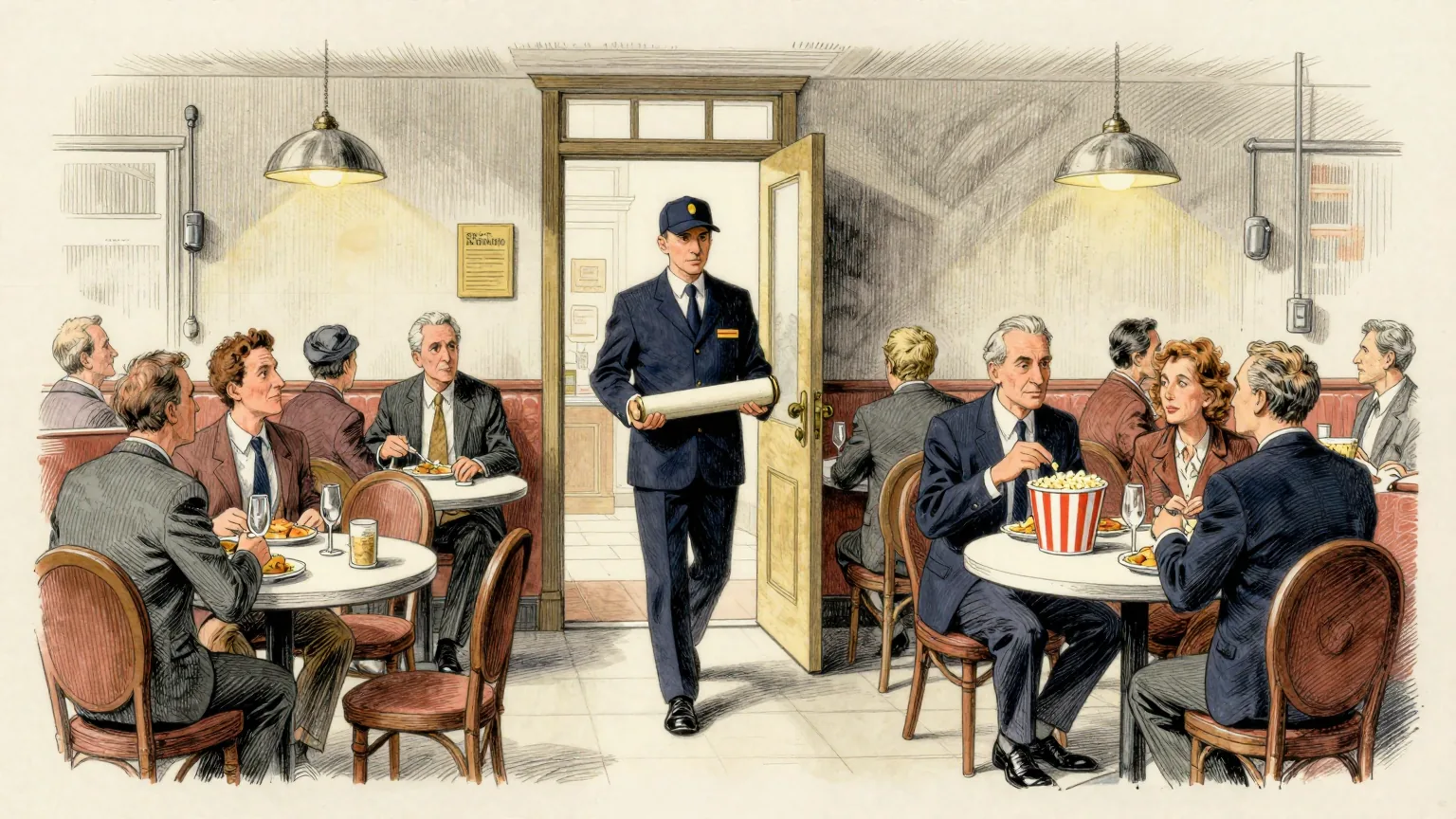
The geography of the regime is equally precise. A site declared foreign by a federal court, blocked by every major carrier and every large resolver in the country, would remain reachable from an airport, a library, a restaurant and a retail store, because Wi-Fi on those premises is exempt. The blocking obligation also begins at 100,000 monthly American users, so a VPN becomes subject to federal copyright enforcement at the moment it becomes popular enough to be worth joining.
Taken together, the bill defines a foreign piracy site as one that cannot be reached from anywhere except the places where people actually sit down.
The Department of Unnecessary Research is satisfied that the question raised at the hearing has now been answered in full. Infringement can indeed be stopped at the speed of light, provided nobody involved is in a library.