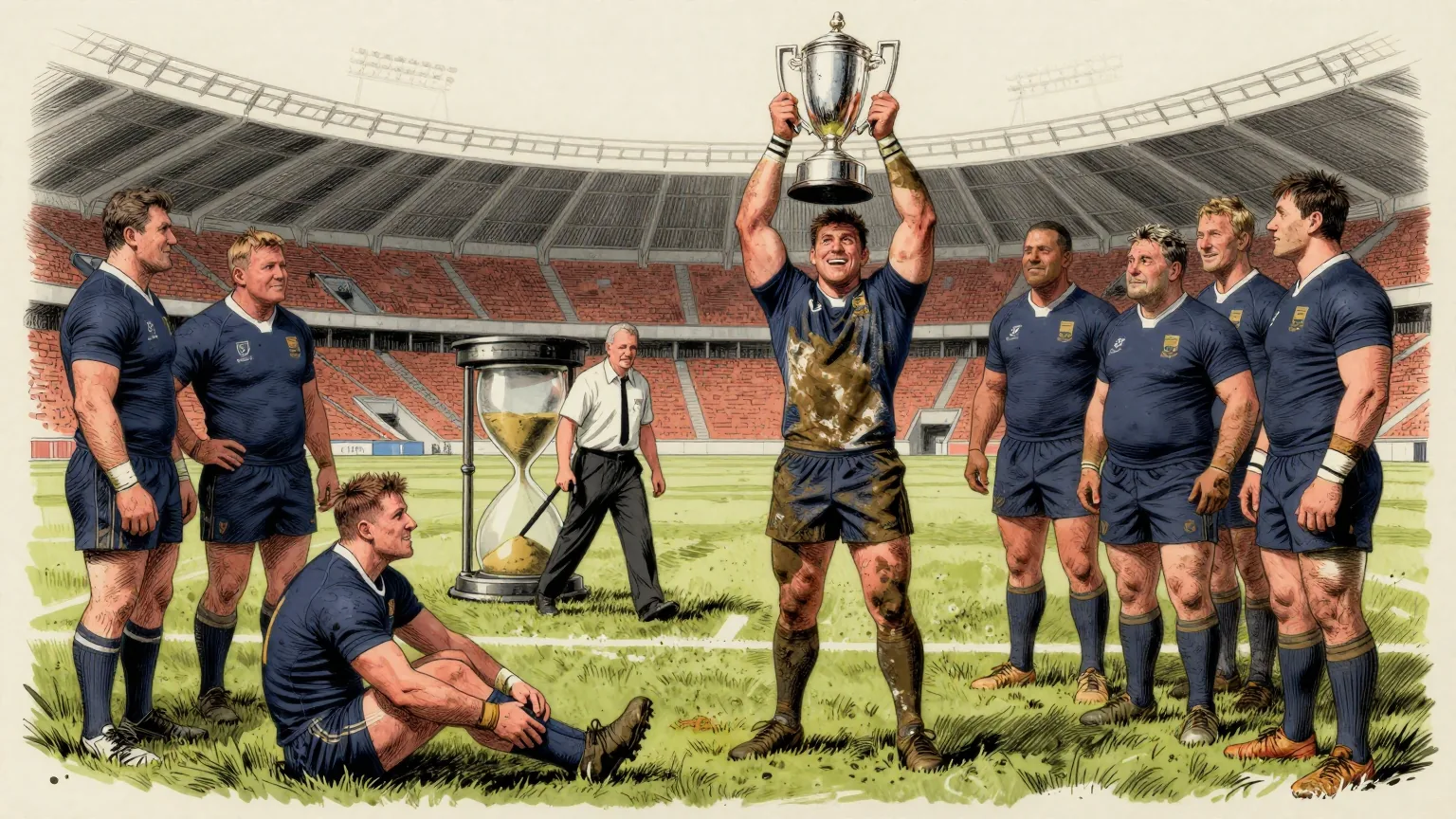
Wakefield Trinity became only the sixth club to win the Super League title, beating Warrington Wolves 23-10 in the Grand Final at Old Trafford.
Daryl Powell's side did the bulk of the damage in a devastating first half, racing into a 19-0 lead with tries from Cameron Scott, Isaiah Vagana and Jazz Tevaga and a drop goal from Jack Sinfield. Jowitt kicked three goals and Tom Johnstone added the fourth try after the break.
It made Wakefield champions of England for the first time since 1968, long before the Super League era began, and it came in the club's first Grand Final.
Two years ago they were in the Championship, winning its play-off final before their Super League place was confirmed by the IMG grading system, having been relegated in 2023. They finished sixth last season and two places better this year, then won play-off ties at Leigh Leopards and Wigan Warriors.
The semi-final at Wigan produced 33 unanswered points. Wakefield carried the run to Old Trafford and stretched it to 52 before Warrington scored.
Warrington had reason to believe this was their year. It was their fifth Grand Final and they arrived on the back of nine wins in 10, the single defeat having come at Wakefield in round 26. Under head coach Sam Burgess they had lost Challenge Cup finals at Wembley in each of the previous two years.
Their route back into the match came when Trinity centre Corey Hall was sin-binned for a high tackle early in the second period, and Arron Lindop went over with the extra man. The momentum did not hold. Wakefield weathered the spell, and once numbers were level Johnstone's power and pace delivered the decisive try.
Lindop scored again late as the Wolves attacked in desperation, but Ewan Irwin missed the conversion, and Trinity were able to count down to the whistle.
There was a neat piece of symmetry in the ceremonies. Sir Kevin Sinfield presented the Grand Final trophy before kick-off; his son Jack kicked Wakefield's drop goal. In the build-up Powell had challenged his players to earn legendary status.
Warrington were last champions in 1955. Their wait for another title now extends into a 72nd year.
That last sentence is where the evening is best understood, because the arithmetic is tidier than the rugby. Wakefield arrived at Old Trafford carrying 58 years and left carrying none. Warrington arrived carrying 71 and left carrying 72.
The wait was not ended. It was moved, and it grew slightly in transit.
The mechanism generalises. Every October one club's wait is discharged in full and every other club's wait is extended by exactly one year. The competition does not reduce the quantity of waiting it contains; it concentrates the relief in one place and distributes the accumulation everywhere else.
Supply is the constraint. Only six clubs have ever won the Super League title, so the stock of waits eligible for discharge is small, while the stock being accumulated is the entire league minus one.
The Department of Unnecessary Research classifies the Grand Final accordingly: not a trophy match but a clearing mechanism, which on Saturday settled 58 years in eighty minutes and issued a fresh year to everyone who was not there.
Warrington return next season carrying 72. There is one way to settle a balance of that size, it becomes available once a year, and it goes to a single club, who are usually clearing a balance of their own.