
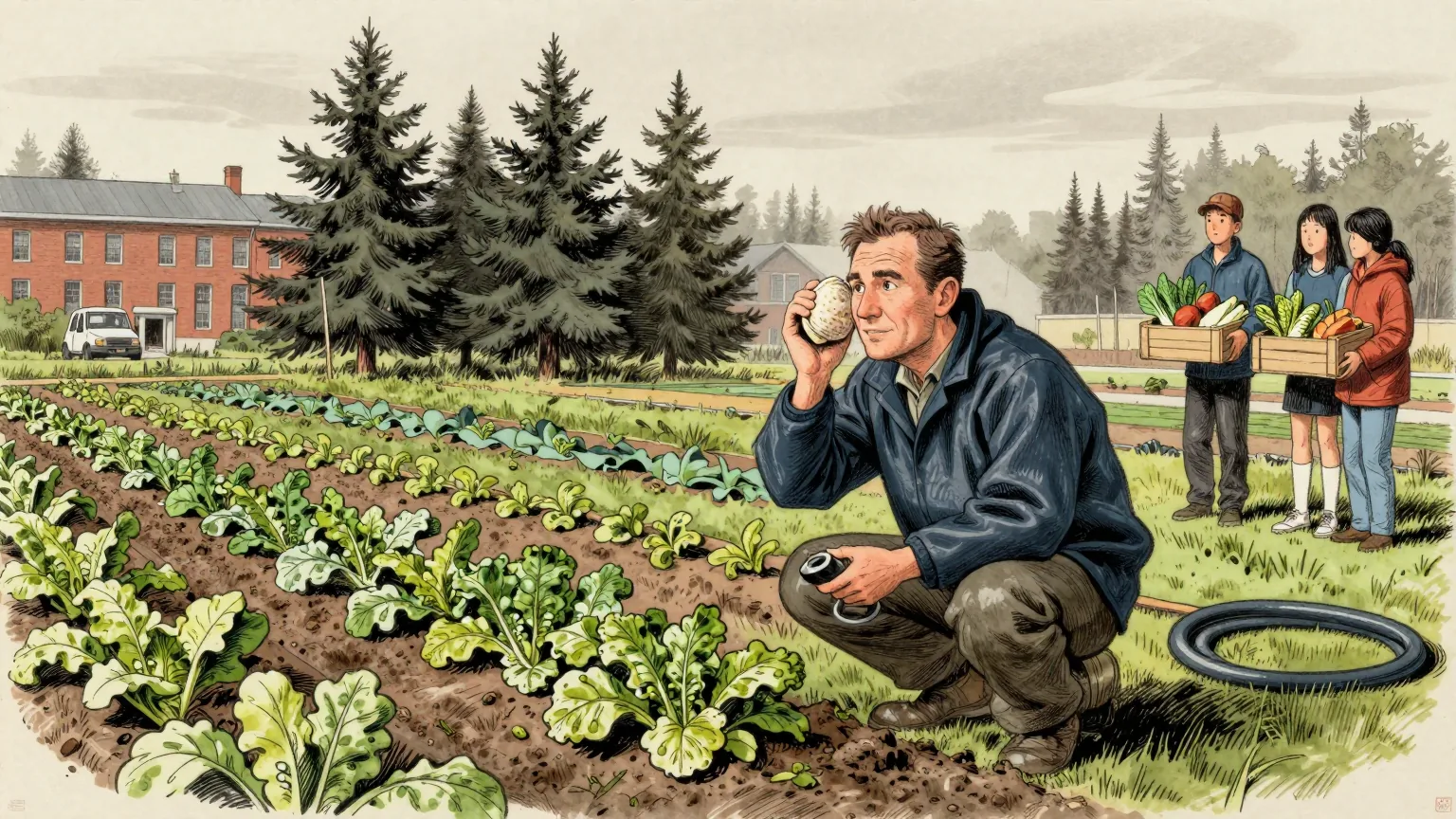
A university farm in the Pacific Northwest has cut its summer irrigation from roughly four waterings a week to three in the entire season, after burying sensors in its soil.
The Outback Farm at Western Washington University grows vegetables in a region outsiders tend to picture as permanently damp. In fact most of its rain falls in winter, and Terri Kempton of the farm says that pattern is becoming less reliable.
"So instead of the kind of constant drizzle, very light rain through all of the months of winter, we're seeing a big storm, a lot of water running off, flooding, and then there's just a dry period while we wait for another big storm," she said.
Summers, meanwhile, are getting hotter and drier. The combination makes it hard for growers to judge when a field actually needs water, as distinct from when it looks as though it might.
Two years ago the farm put soil moisture sensors into some of its fields.
"So then I'm not left guessing like, well, it did rain yesterday, but did it go deep enough to matter to the plant roots?" Kempton said. "I don't have to dig a hole and stick my hand in it. I can just, like, boop, read the little sensor that's already buried underground and it will tell me."
The farm then watered only when the sensors said watering was needed. "So that saves time, and of course it saves water, a lot of water," she said.
It is worth listing what changed at the Outback Farm and what did not. The crops did not change. The soil did not change. The weather did not change. The irrigation system did not change.
A small object was buried in the ground, and the farm's water requirement collapsed.
This newspaper draws the available conclusion. The farm did not reduce its need for water. It established that the need had not been there.
The water was already in the ground, at root depth, where it had been the whole time. What the field was short of was not rain. It was an opinion about rain.
The Department of Unnecessary Research has put the natural follow-up question, which is what share of any given drought consists of not having looked. The department accepts that this is not how droughts work and would like the sensors checked anyway.
Before the sensors, four waterings a week. After them, three all summer. The rain had always gone deep enough. Nobody had asked it.