
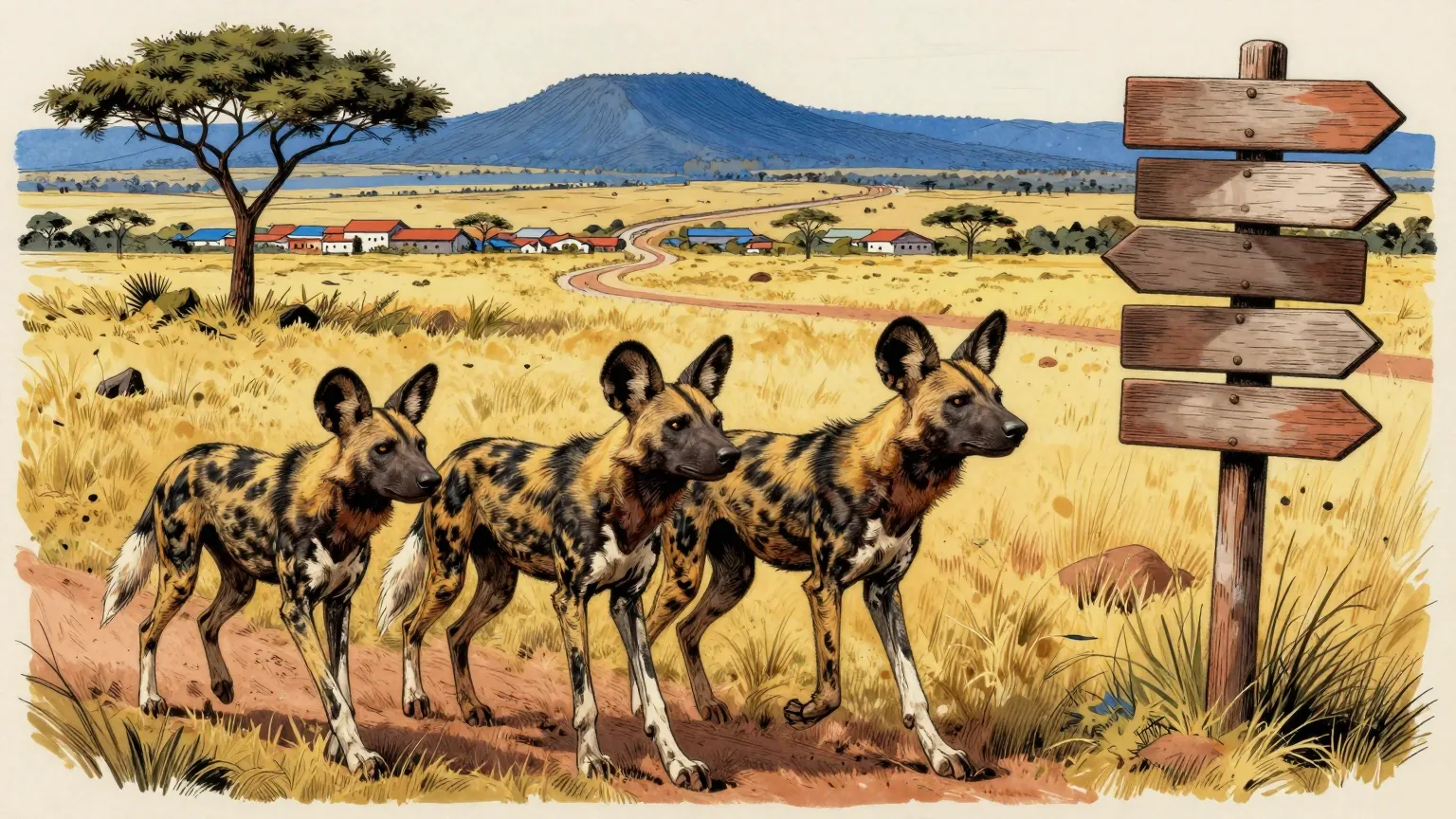
Three African wild dog brothers have completed an extraordinary journey across Zambia, travelling roughly 4,000 kilometres over eight months while searching for breeding opportunities outside the pack into which they were born.
The distance is remarkable even for a species known for roaming. The brothers ended only about 260 miles from where they started in straight-line terms, but their actual route was almost ten times longer as they zigzagged through a landscape divided by towns, roads, farms and industrial development.
Researchers distinguish this behaviour from migration. Migration generally involves repeated seasonal movement between habitats; dispersal is a one-way departure from a home population to establish or join another group. African wild dogs typically leave their birth pack at around two or three years old because breeding within that pack is not an option.
That makes the route scientifically important as well as spectacular. The dogs moved between wildlife strongholds and skirted major human obstacles, including the area around Lusaka. Their progress suggests populations across eastern and southern Africa may be more connected than conservationists had assumed.
The encouraging result comes with a serious warning. Other collared dogs in the study encountered illegal snares, and two of three females involved in another long journey died. Conservationists argue that protected areas cannot function indefinitely as isolated islands and that wildlife corridors between them remain important.
Only about 6,000 African wild dogs are estimated to remain in the wild. For an endangered predator living in highly social packs, the ability to move between distant populations can help preserve genetic exchange and create new breeding groups even as human development fragments habitat.
The three brothers therefore demonstrated resilience, navigation and a willingness to cross an amount of Zambia that would cause most human dating-app users to increase their search radius from 25 kilometres to 30 and then give up.
After reviewing the evidence, The Questionable Times can only conclude that the central conservation challenge is not habitat fragmentation but an extremely inefficient singles market. A 4,000-kilometre commute for a date is unsustainable, and wildlife authorities should consider a continental matchmaking corridor with clearly marked scent profiles, neutral meeting areas and substantially better filtering options.