
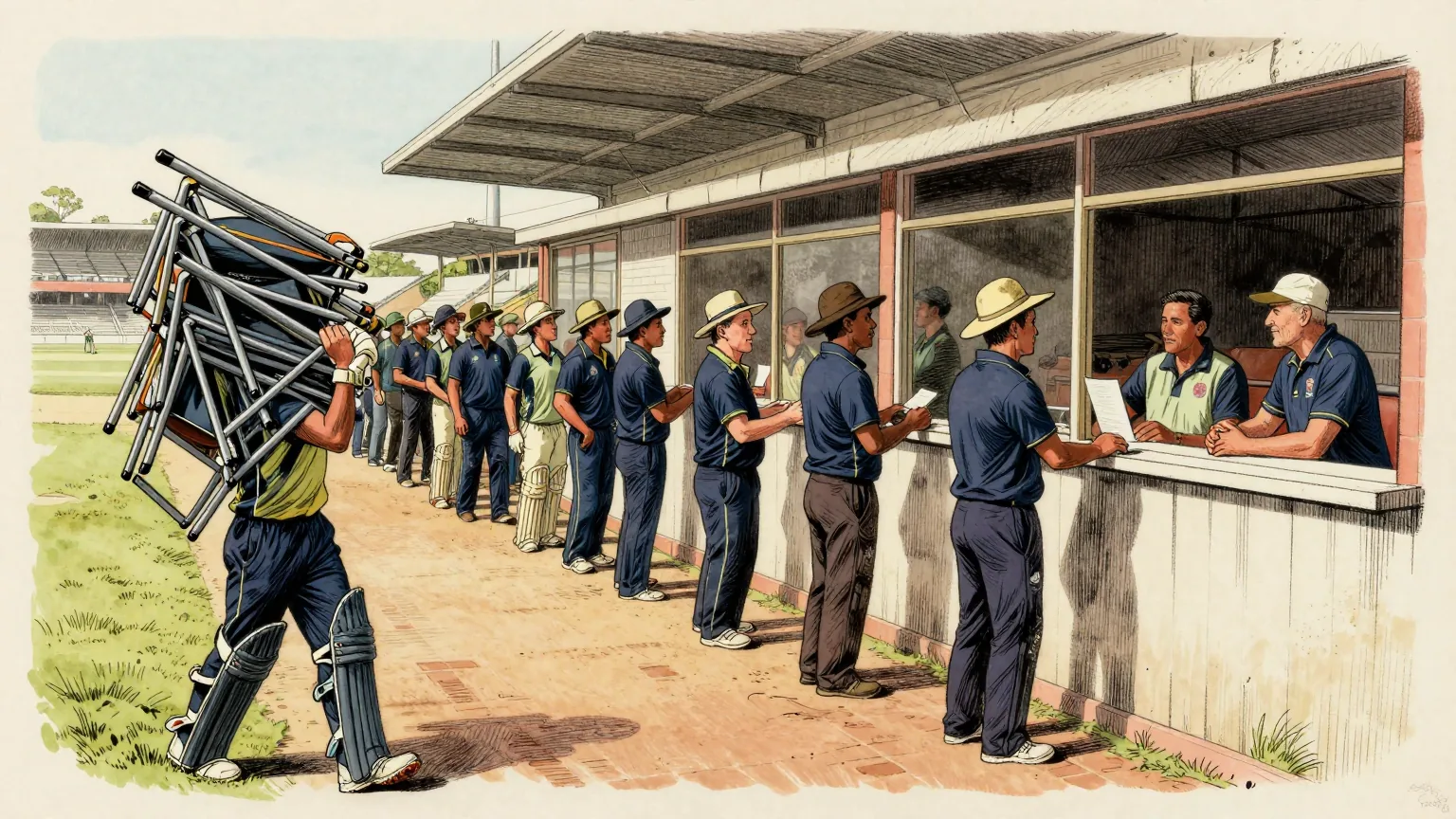
More than 1.1 million ticket applications have been submitted for the 2027 ODI World Cup, days after the ballot opened on 1 October.
More than 320,000 fans have registered for the ballot since it opened, with applications arriving for matches across South Africa, Zimbabwe and Namibia. The ballot remains open until 23:59 CAT on 21 November.
The India–Pakistan group-stage match in Johannesburg on 10 October has attracted more than 110,000 applications, making it the most sought-after fixture of the tournament so far. The two sides are in Group A alongside Australia, Afghanistan, Zimbabwe and Qualifier A.
Demand is not confined to that fixture. India’s meeting with South Africa has received more than 92,000 applications and the match against Australia more than 86,000, putting India’s first three major group-stage games in the top three places.
India open their campaign against the defending champions Australia in Cape Town on 7 October, before facing Pakistan three days later in Johannesburg.
The pre-seeded Super 7 fixture between India and Pakistan on 7 November has already drawn almost 78,000 applications, the fourth most sought-after match at this stage. The final, on 21 November, has attracted close to 69,000.
Sanjog Gupta, the chief executive of the International Cricket Council, said a million applications in just over 48 hours of the ballot opening demonstrated the attention, stature and affiliation the event commands. "ICC events are now spectacles which transcend cultural and geographic boundaries and serve as platforms to widen and deepen fandom for the sport," he said.
The tournament marks the return of a major ICC men’s event to Africa after two decades, with South Africa, Zimbabwe and Namibia sharing hosting duties. It begins with a three-team Super Series in Namibia on 2 October, the group stage starts on 7 October, and the final is in Johannesburg on 21 November. "This is also Africa’s moment to shine as an ICC marquee men’s event is returning to the continent after two decades and brings with it the attention of 2.5 billion cricket fans across 120+ countries," Gupta said.
Qondisa Ngwenya, chief executive of the 2027 World Cup local organising committee, called the early response a "major statement by global fans".
The arithmetic of the ballot is where this becomes interesting. More than 1.1 million applications have come from more than 320,000 registered fans, which is about 3.4 applications each. What has been measured, precisely, is not how many people want to go. It is how many times a form has been filled in.
On that reading the figure has no ceiling, and the ballot has six weeks left to run. Demand is counted in entries, entries cost nothing to submit, and the only limit on the number of entries is the number of fixtures a supporter is willing to name. Lengthen the tournament and demand rises.
The distribution is equally instructive. The four most sought-after fixtures all involve India, and the fifth is the final, which India may also involve. Our analysts conclude that the ballot has not identified the most popular match at the 2027 World Cup. It has identified the most popular team, and then listed the dates on which that team is available.
The Department of Unnecessary Research has put the obvious remedy to the organisers. If demand is applications, and applications follow one fixture appearing on the form, then the way to satisfy 1.1 million of them is to schedule India in every match, including the ones they are not in. The ballot closes on 21 November, exactly one year before the final. Nobody has yet had to sit down.